
The Debt Payoff Playbook: Avalanche vs. Snowball Explained
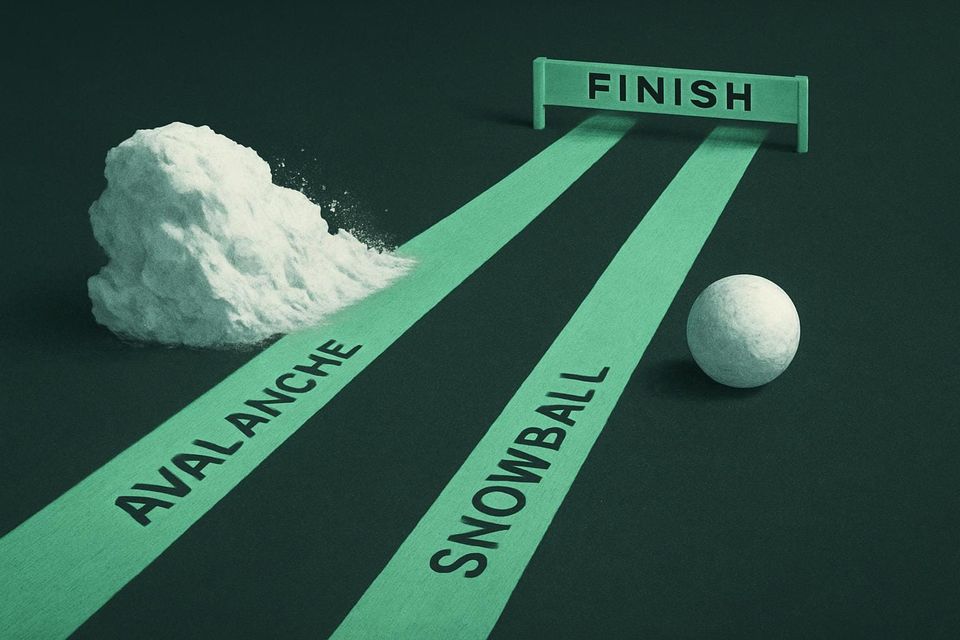
You have multiple debts. You have some extra money each month. Which debt do you pay first?
There are two main strategies and they give different answers. Here's how to pick the one that works for you.
The Avalanche Method
Pay minimums on everything. Put all extra money toward the debt with the highest interest rate. When that's paid off, roll that payment to the next highest rate. Repeat.
The math: Avalanche minimizes total interest paid over the life of your debt payoff. It is objectively the most financially optimal strategy.
The problem: If your highest-rate debt also has the largest balance, you might be working at it for years before you see a win. The psychological toll of no visible progress causes many people to abandon the strategy entirely.
The Snowball Method
Pay minimums on everything. Put all extra money toward the debt with the smallest balance. When that's paid off (quickly), roll that payment to the next smallest balance. Repeat.
The math: Snowball costs more in total interest than avalanche. Sometimes significantly more.
The advantage: Quick wins. Seeing accounts close creates real psychological momentum. Research by Harvard Business Review found that people who use snowball are more likely to actually finish paying off their debt — even when avalanche would have saved them money.
Which One Should You Use?
The honest answer: the one you'll actually stick to.
If you're highly analytical and can stomach years of work before seeing a win, avalanche. If you need momentum to stay motivated, snowball. If your highest-rate debt is also your smallest balance, both methods give you the same answer anyway.
The Factor Most People Miss
The most impactful variable in debt payoff isn't the method — it's the monthly payment amount. Increasing what you put toward debt by $200/month almost always matters more than which order you pay them off.
Find the extra $200 first. Then pick a method and execute.